The "Metabolic Switch" scientists found inside rare citrus fruit- and why your Doctor never mentioned it
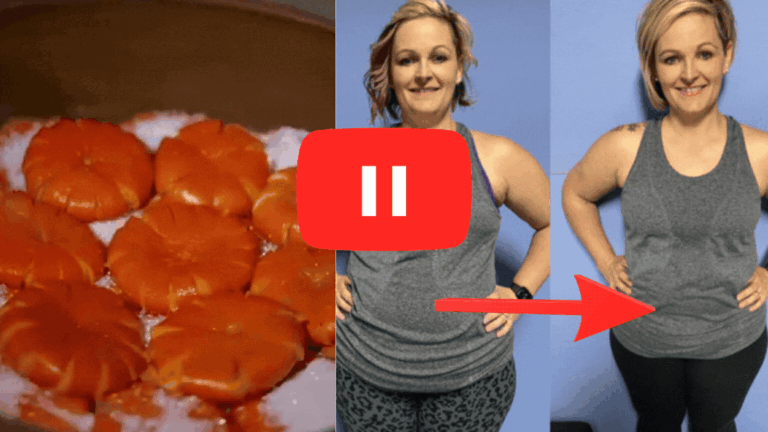
New research shows 9 in 10 Americans over 40 have this switch stuck in the “off” position — and a simple 11-second morning ritual may be the only way to flip it back on.
If you’ve ever done everything right — watched what you ate, exercised, cut out sugar — and still couldn’t lose the weight… this might be the most important thing you read this year.
Because the problem almost certainly isn’t what you think it is.
It’s not calories. It’s not carbs. It’s not even your thyroid.
According to a group of researchers at a metabolic health institute, there’s a single enzyme in the human body — lipid oxidase — that acts like an on/off switch for fat burning. When it’s active, your body converts stored fat into energy around the clock, even while you sleep. When it’s blocked… nothing works. No diet. No exercise. Nothing.
“We had patients who were clinically eating at a deficit and still gaining weight. Once we looked at lipid oxidase levels, everything made sense. The switch was simply off.”
— Metabolic research team, 2024 study
Here’s the disturbing part: after age 35, this enzyme naturally starts declining. By age 45, most people have lost more than half their fat-burning capacity — and they have no idea why they can’t lose weight no matter how hard they try.
But researchers stumbled onto something surprising. A small, obscure citrus fruit — cultivated in only three micro-climates in the world — contains a compound that appears to directly reactivate lipid oxidase at the cellular level. In a controlled 21-day study, participants who consumed it daily lost an average of 12–17 pounds. With no change in diet.
The mechanism is surprisingly simple. The compound binds to receptor sites in the mitochondria — the energy factories of your cells — and essentially “unlocks” the fat-burning process that stress, age, and processed food had jammed shut.
One participant, a 47-year-old woman from Ohio, described it this way: “It felt like my body just… woke up. Like someone flipped a switch.”
The researchers have since developed an extraction process that concentrates this compound into a form that can be taken in seconds each morning. Early access has been limited — demand has repeatedly outpaced supply — but a small batch is currently available to the public.
This website is independent of Google, Inc. and Google.com and is neither sponsored nor endorsed by Google. The trademark “YouTube” is owned by Google, Inc.
Before putting into practice any strategy mentioned on this website, it is advisable to seek guidance from a healthcare professional.
Copyright 2024. All Rights Reserved.